Dessert can affect your acne, but not in the all-or-nothing way social media makes it sound. Over time, excess sugar can trigger hormonal and inflammatory changes that make acne worse for some people.
If you've ever noticed a breakout a few days after a birthday cake, a holiday cookie binge or a week of sweet coffee drinks, you're not imagining things, and you're not alone. Let's take a closer look at the connection between sugar and acne, and what you can do to balance your diet for clearer skin, without giving up dessert for good.
Acne starts when pores clog with oil, dead skin cells and bacteria. Hormones, genetics, stress, medications and skincare products all play a role. Sugar is one of several things that can tip the balance.
Here is the chain of events most researchers point to:
Blood sugar spikes. Sweets, refined flour and sugary drinks are digested quickly, so blood sugar rises fast. Foods that do this are called high-glycemic foods.
Insulin rises. Your body responds to the spike by releasing insulin, and higher insulin can raise levels of another hormone, IGF-1.
Hormones shift. Insulin and IGF-1 can increase the activity of androgens, the hormones that tell oil glands to produce more sebum.
Oil and inflammation increase. More oil means more clogged pores, and inflammation is what turns a clogged pore into a red, swollen breakout.
This is why the same dessert can be a non-event for one person and a trigger for another. Genetics, hormones and the rest of your diet all change how your skin responds.
What the research says
The honest answer is that sugar is a real but modest factor, and the science is still evolving.
A systematic review of 34 studies, published in 2022, found that high-glycemic diets and higher glycemic load were linked to more acne and more severe acne, with randomized trials backing that up. The authors described the effect as modest yet significant (review abstract).
One of the best-known trials followed 43 young men with acne for 12 weeks. Those on a low-glycemic diet had a significant drop in acne compared with those eating their usual diet. The researchers noted they could not separate the effect of the diet from the effect of weight loss (Medical News Today).
Older observational studies are more mixed, and not every study has found a link between sugar intake and acne. That is why dermatologists generally treat diet as a supporting player, not the main cause. Dairy is a similar story: the evidence is mixed and may depend on the person.
How to balance your diet for clearer skin
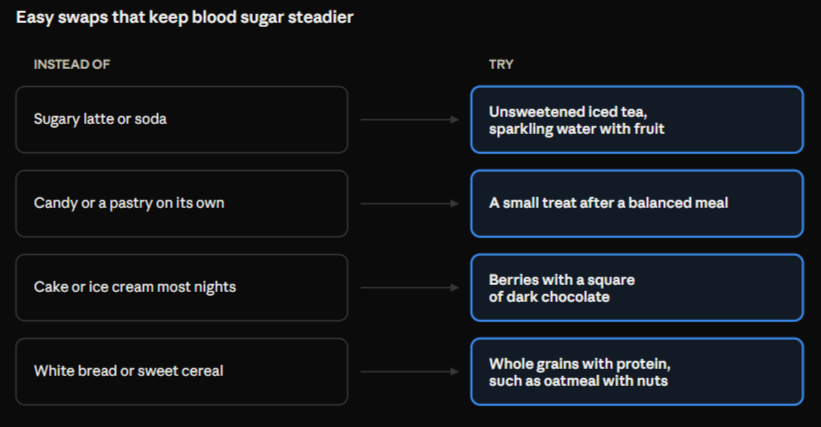
You don't need to cut out dessert. The goal is to keep blood sugar steadier, so your skin isn't riding a spike every day.
Pair sweets with protein or fiber. Eating dessert after a meal, rather than on an empty stomach, slows how fast sugar hits your bloodstream.
Keep portions modest. A few bites of something you love beats a whole box of something you don't.
Watch liquid sugar. Sweet coffee drinks, soda and juice raise blood sugar quickly and are easy to overlook.
Build meals around low-glycemic foods. Vegetables, beans, whole grains, nuts and lean protein release energy more gradually than white bread and processed snacks.
Go for antioxidant-rich foods and stay hydrated. Berries, leafy greens and plenty of water support healthy skin overall.
Track your own triggers. Jot down what you eat and how your skin looks over a few weeks. Your pattern matters more than any general rule.
Diet is only one piece of the puzzle
If you cut back on sugar and your skin still isn't clear, that doesn't mean you did something wrong. Acne has many contributors, including:
Hormonal changes during puberty, menstrual cycles, pregnancy or menopause
Genetics, since acne tends to run in families
Stress, which can raise cortisol and increase inflammation and oil production
Certain medications, such as corticosteroids
Heavy, oil-based makeup, sunscreens or hair products that can clog pores
Persistent, painful or scarring breakouts, especially deep cysts along the jawline and chin, are worth having evaluated by a dermatologist. Diet changes work best alongside a consistent, gentle skincare routine and the right treatment for your skin type.
Also keep in mind that cutting out whole food groups is rarely necessary, and very restrictive eating can backfire. If you're thinking about big dietary changes, check in with your doctor first.
The sweet takeaway
Dessert isn't the enemy. For many people, frequent sugar spikes can nudge hormones and inflammation in the wrong direction, so balance, portion size and timing matter more than perfection.
This article is for general education and isn't medical advice.
